
40ft Shipping Container Home Options for Modern WA Families
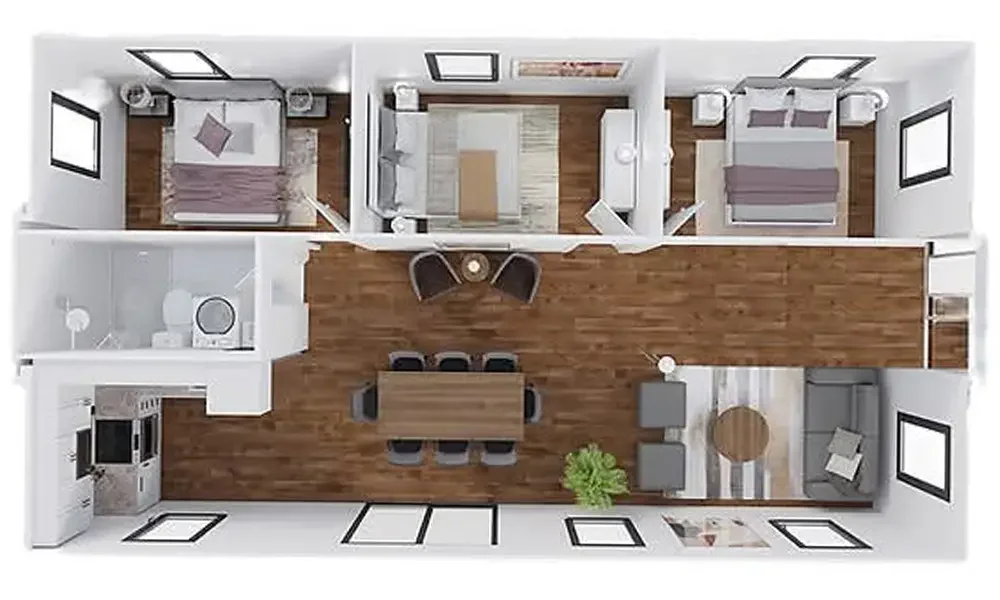
Container homes have come a long way from their industrial shipping roots. What started as an experimental housing solution has become a legitimate option for people looking for affordable, portable, and surprisingly stylish living spaces. But one of the first decisions you'll face is simple: do you need a 20ft or 40ft container?
The difference isn't just about size. Each option comes with its own cost structure, transport considerations, and design possibilities. Getting this choice right from the start saves you money and headaches later.
Understanding the Basic Dimensions
A 20ft shipping container gives you about 160 square feet of floor space. The external dimensions are 20ft long, 8ft wide, and typically 8.5ft high. Inside, you're working with roughly 19ft by 7.7ft once you account for the corrugated walls.
A 40ft container doubles that length. You get about 320 square feet to work with. The width and height stay the same, just stretched out to 40ft long.
Here's what that looks like in practical terms:
Container home cost breakdown
Factory Fit Homes · Perth, WA · factoryfithomes.com.au
| Item | Budget | Mid-range | Premium |
|---|---|---|---|
Container + delivery | $4,000–$6,000 | $6,000–$8,000 | $8,000–$10,000 |
Insulation + lining | $8,000–$12,000 | $12,000–$18,000 | $18,000–$25,000 |
Windows + doors | $3,000–$5,000 | $5,000–$8,000 | $8,000–$12,000 |
Bathroom pod | $8,000–$12,000 | $12,000–$18,000 | $18,000–$25,000 |
Kitchen | $5,000–$8,000 | $8,000–$15,000 | $15,000–$25,000 |
Flooring | $2,000–$3,000 | $3,000–$5,000 | $5,000–$8,000 |
Electrical + plumbing | $6,000–$10,000 | $10,000–$15,000 | $15,000–$20,000 |
Site prep + foundations | $3,000–$6,000 | $6,000–$10,000 | $10,000–$15,000 |
Site costs vary. If you're placing the container on level ground with easy access, you might only need concrete piers. If the site is sloped or requires excavation, costs can double.
Council fees, engineering reports, and building permits add another $2,000 to $5,000.
Most WA builders offer turnkey packages where they handle everything from design to handover. These typically cost more per square metre than traditional builds, but the timeline is much faster.
Delivery and Installation Process
A 40ft shipping container weighs about 4 tonnes empty. Once fitted out, it can weigh 6 to 8 tonnes. You need a crane or large forklift to position it on site.
The standard process looks like this:
Site preparation — level the ground and install foundations.
Services rough-in — run water, sewer, and electrical conduits.
Container delivery — arrives on a truck with a crane or tilt tray.
Placement — lifted into position, usually takes 2-3 hours.
Final connections — plumber and electrician connect services.
Sign-off and inspection — building surveyor checks everything meets code.
From site prep to move-in ready, the process typically takes 6 to 12 weeks. This is much faster than a traditional build.
Access is crucial. The truck delivering the container needs a clear path at least 3.5 metres wide and 4 metres high. If your block has narrow access or overhead power lines, the crane may need to lift the container over obstacles.
Always check access before committing. Some blocks in older Perth suburbs have tight side access that makes delivery difficult.
Maintenance and Longevity of Container Homes in WA
Shipping containers are built to survive ocean crossings. On land in WA, they'll last decades with minimal maintenance.
The main enemy is rust. Containers are Corten steel, which forms a protective rust layer. But cutting holes for windows and doors exposes bare metal that needs sealing and painting.
A well-built container home should have cut edges treated with rust inhibitor. The exterior is typically painted with marine-grade paint. This needs repainting every 8 to 10 years in coastal areas.
The roof is the most exposed part. Some builders add a Colorbond roof over the container roof for extra protection. This adds cost but extends the container's life and improves thermal performance.
Inside, maintenance is similar to any home. Keep the bathroom sealed and ventilated to prevent moisture issues. Service the air conditioner annually. Check window and door seals every few years.
Containers don't have the same issues as timber frames. No termites, rot, or cracking slabs. The structure is solid and requires almost no maintenance.
Most container homes in WA are still relatively new, but containers can last 25+ years in harsh marine environments. With proper care, 50 years is realistic.
Comparing 40ft Container Homes to Traditional Builds
Families choose container homes for speed and cost certainty. A traditional build in WA takes 8 to 12 months from approval to completion. A container home takes 6 to 12 weeks.
Cost certainty is another big factor. Traditional builds often exceed budgets due to delays and hidden costs. With a container home, you're buying a largely prefabricated product, so the quoted price is usually close to what you pay.
The trade-offs include less design flexibility. You're working within the dimensions of a 12-metre box.
Resale uncertainty is another concern. Container homes are still less common, so buyer appetite is unknown.
Financing challenges can also arise. Some lenders hesitate to finance container homes, especially as primary residences.
For families using a container as a granny flat or secondary dwelling, these trade-offs matter less. You need a functional, affordable space that's quick to build.
For a primary residence, a traditional build might make more sense unless you're drawn to the container aesthetic or need something fast.
Where to Start with Your 40ft Container Home Project
The first step is talking to a builder who specializes in container homes in WA. Not every builder works with containers, so experience matters.
Before that conversation, figure out:
- What you'll use the space for — granny flat, studio, home office, or permanent dwelling.
- Your budget, including site prep and services connection.
- Whether your council allows secondary dwellings on your block.
- Site access and where the container will sit.
Most builders offer a free initial consultation. They'll assess your block, discuss design options, and give you a ballpark price. From there, you'll receive a detailed quote and timeline.
If you're building on an existing block with services connected, the process is straightforward. If you're building on raw land, expect more complexity and higher costs.
Container homes aren't the cheapest option per square metre, but they're fast, predictable, and built to last. For WA families needing space now, they're worth serious consideration. Head to https://www.factoryfithomes.com.au/ to see what's possible and start planning your project.
Frequently Asked Questions
How much does a 40ft shipping container home cost in WA?
A complete 40ft container home in WA typically costs between $75,000 and $120,000. Budget options start around $45,000 but usually lack proper insulation and quality finishes.
Do I need council approval for a container home in WA?
Yes. Shipping container homes are treated as buildings and require council approval, building permits, and compliance with the Building Code of Australia. If it's a secondary dwelling under 60-70 square metres, approval is usually straightforward but still required.
How long does a 40ft container home last?
A properly maintained container home in WA should last 50+ years. The steel structure is extremely durable. The main maintenance is repainting the exterior every 8-10 years in coastal areas to prevent rust.
Can you get finance for a container home in Western Australia?
Some lenders will finance container homes, but it's less straightforward than traditional builds. Container homes as secondary dwellings are easier to finance than as primary residences. Talk to your bank early in the planning process.
How do you keep a shipping container home cool in Perth summers?
Proper insulation (50-75mm spray foam), double-glazed windows, a verandah or deck for shade, and a split system air conditioner are essential. Cross-ventilation with louvre windows helps on cooler days. Without these, a container home in Perth can be uncomfortably hot.
